Exploring Rural And Land Opportunities Around Brooksville
July 2, 2026
July 2, 2026
If you have been thinking about more space, more privacy, or a property with room to build, Brooksville should be on your radar. Rural and land opportunities around Brooksville can look appealing at first glance, but they also come with details that matter before you buy. In this guide, you’ll get a practical look at the types of land you may find, what makes this area different, and how to evaluate a property with confidence. Let’s dive in.
Brooksville sits in Hernando County about forty-five miles north of Tampa and about fifteen miles east of the Gulf of Mexico, with access at the junction of U.S. 41, U.S. 98, and State Road 50. That location gives you a mix of small-town feel and regional access, which is one reason buyers often look here for rural property.
The broader Brooksville area also includes several historic rural communities, including Spring Lake, Lake Lindsey, Istachatta, and Nobleton. That matters because the rural market here is not one single pattern. Different areas can offer different parcel sizes, road access, and land-use context.
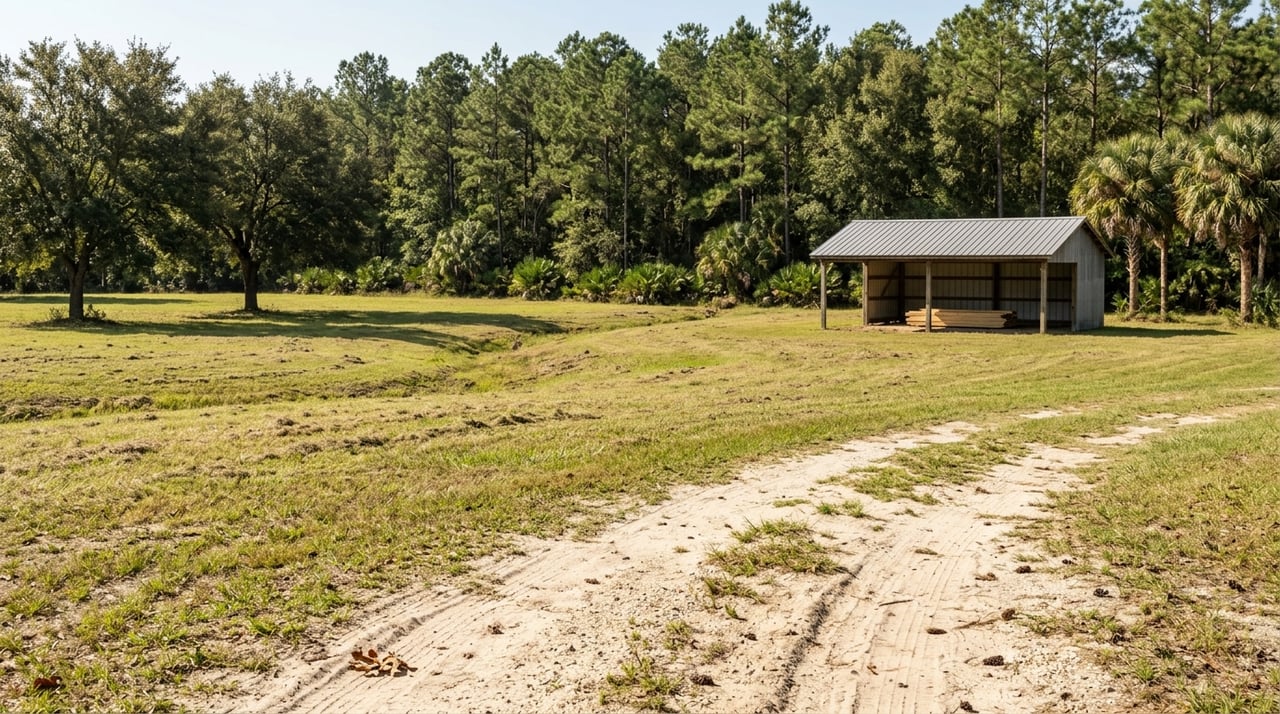
When people hear “land,” they often picture a large farm or ranch. Around Brooksville, the reality is more varied. You may find smaller vacant homesites, infill lots, acreage homesites, country tracts, and agricultural parcels.
Some lots are intended for a future home, while others may be better suited for agricultural or rural residential use. Hernando County’s planning framework supports agriculture, agricultural commercial uses, agri-industrial uses, recreation, agritourism, and rural residential uses in its Rural Category. That creates a broad mix of possible property types, but it does not mean every parcel can be used the same way.
Not every opportunity around Brooksville is a large piece of land. Some properties are smaller building parcels or infill lots, and these can appeal to buyers who want a custom home without maintaining a big tract.
That said, county planning rules make clear that recognized infill areas can develop only when access and lot-size requirements are met. So even if a lot looks buildable, you still need to confirm that it meets current standards before moving forward.
Acreage homesites are a major part of the Brooksville-area market. County zoning dimensional standards show rural and agricultural parcel patterns that include minimum sizes such as 2.5, 5, 7.5, 10, 20, 30, and 40 acres in different situations.
The county’s Rural Future Land Use Category is generally one dwelling unit per 10 gross acres, with a legacy exception for some parcels that were in single ownership as of January 1, 1990. For you as a buyer, this is a reminder that parcel size alone does not tell the whole story. Density and build potential depend on the specific land-use and zoning context.
If your goal is a property with room for agricultural activity, Brooksville’s surrounding rural areas may offer options worth exploring. Hernando County’s plan specifically supports agricultural pursuits, locally grown products, and small specialty agriculture when those uses are compatible with surrounding land uses.
This can be important if you want flexibility beyond a standard homesite. Still, compatibility and allowed use should always be verified early, since assumptions can lead to expensive surprises later.
One of the biggest differences between rural land and a typical subdivision lot is infrastructure. In Hernando County, infrastructure planning prioritizes urbanized and urbanizing areas, while the Rural Category is not intended to support urban development through public infrastructure.
In plain terms, you should not assume that every rural parcel has public water or sewer available. Some properties may be served by public systems, while others may rely on private well and septic solutions.
Hernando County notes that public suppliers in the county include the Hernando County Water & Sewer District and the City of Brooksville. But availability varies by property and location.
Before you get too far into a purchase, ask whether the parcel has access to public water, public sewer, private well, septic, or some combination of those. This single step can shape your building costs, timeline, and even whether a property fits your plans.
The Florida Department of Health in Hernando County permits septic installations, repairs, and modifications. It does not regulate private wells, and state health guidance recommends annual testing for bacteria and nitrate if a property uses a private well.
The same guidance notes that bacteria and nitrate can reach groundwater through poorly maintained septic systems, livestock areas, fertilizer application, or poorly constructed wells. If you are considering rural land with a well or septic system, this is a practical issue worth reviewing early.
A beautiful piece of land is only part of the equation. Legal and physical access are essential, especially if you plan to build now or later.
Hernando County planning documents require adequate access for new building lots and compliance with lot-size rules related to potable water, well, and septic tank requirements. For larger rural projects, the county also states that access to a county-maintained roadway is required and that improvements may be needed as part of approval.
Road frontage can affect both usability and approval potential. A parcel may look attractive on a map, but if access is limited, shared, or requires upgrades, your costs and timeline may change.
This is one reason rural land deserves a more careful review than a standard neighborhood purchase. On larger tracts especially, off-site improvements may become part of the picture.
Land can look flat and usable in photos, but site conditions tell a bigger story. Flood status, wetlands, setbacks, and conservation overlays can all affect what you can build and where you can place it.
For early research, Hernando County’s GeoHub is a strong starting point because it combines land use, setbacks, flood zones, wetlands, and conservation lands in one map. The county also says FEMA’s Flood Insurance Rate Map is the official flood-zone source, while local watershed data can affect development even when FEMA maps do not show it.
Before spending money on plans, take time to review the parcel using county mapping tools. This can help you spot issues that may not be obvious from a listing description or drive-by visit.
A quick review may reveal flood exposure, irregular setbacks, wetlands, or conservation constraints that shape what is realistic for the property. It is better to know those facts upfront than after you are under contract.
Brooksville-area rural land can offer more flexibility and more breathing room, but it usually requires more homework than a typical subdivision lot. A smart approach is to verify the basics before you focus on design ideas or long-term plans.
Here are some of the first items to check:
County Code Compliance also advises residents to check with Development Services before building to confirm whether a permit is required. That includes practical items buyers sometimes assume are simple, such as a future homesite, barn, shed, or fence.
The appeal of rural property around Brooksville is easy to understand. You may find more space, more privacy, and more flexibility than in a conventional suburban setting.
At the same time, the best opportunities are usually the ones that match your goals and your tolerance for upfront research. A parcel that works well for a future home may not be the same parcel that fits agricultural use, specialty use, or a long-term land hold.
That is why local guidance matters. When you have a brokerage that understands land, unique property situations, and the practical side of due diligence, you can make decisions with fewer surprises and more confidence.
If you are exploring acreage, homesites, or land opportunities around Brooksville, Russell Adams Realty Inc can help you evaluate the details that matter and move forward with a clear plan.
Stay up to date on the latest real estate trends.
Choosing the right real estate partner can make all the difference. We provide a modern approach to real estate by combining local expertise, powerful marketing strategies, and personalized client service.