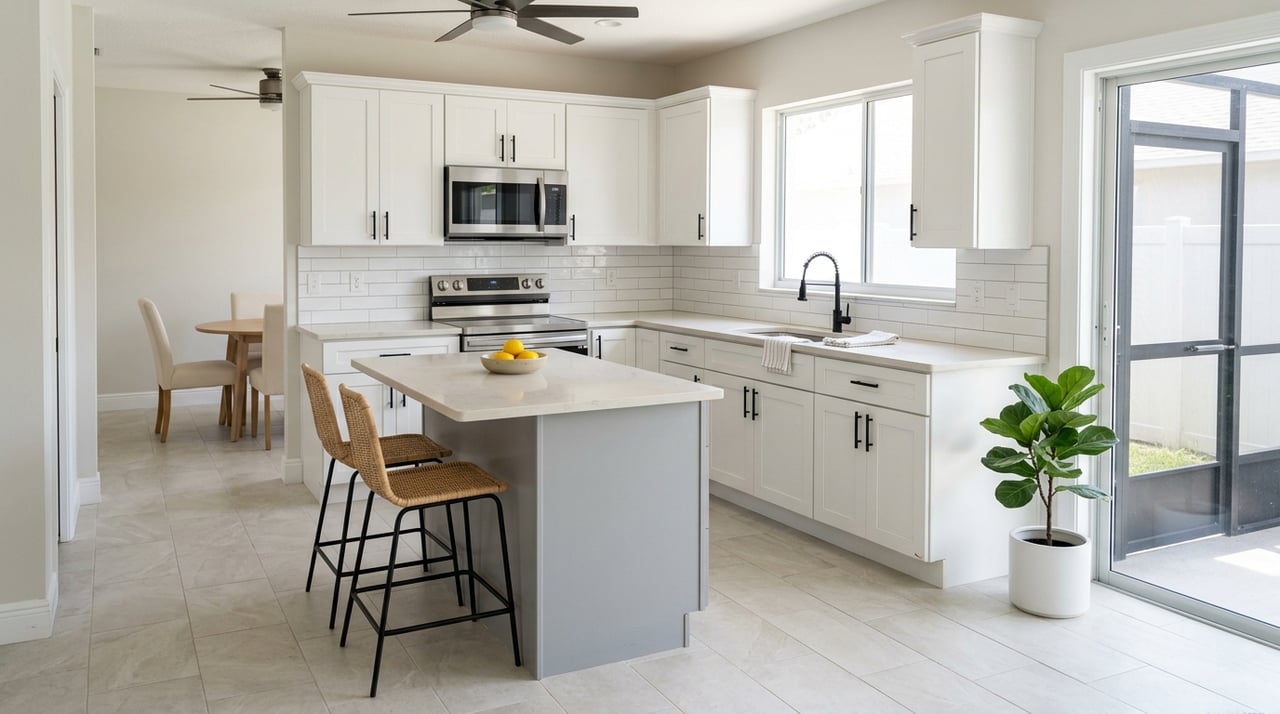
What To Know Before Buying A Rental In Spring Hill
June 25, 2026
June 25, 2026
Thinking about buying a rental in Spring Hill? It can look like a smart entry point into the Tampa Bay area, especially if you want a single-family property at a lower price than some nearby markets. Still, a good rental decision is about more than the purchase price. You also need to understand rent potential, property condition, insurance, taxes, and Florida landlord rules before you close. Let’s dive in.
Spring Hill is the largest unincorporated community in Hernando County and sits within the broader Tampa Bay regional corridor. With access through the Suncoast Parkway, I-75, State Road 50, and US Highway 41, the area connects to larger job centers beyond Spring Hill itself.
That matters if you are buying a rental. Hernando County’s median household income is $70,291, the median age is 47, and the mean commute time is 31.4 minutes. Those figures suggest demand is tied in part to regional commuting patterns, not just strictly local employment.
Spring Hill also stands out because it offers a lower entry point than nearby Pasco County based on the research provided. Spring Hill’s median gross rent is $1,440 and median owner-occupied value is $288,500, compared with Pasco’s $1,505 median gross rent and $300,900 median owner value.
If you are trying to match the property to the market, single-family homes are the clearest fit. Spring Hill has 45,571 households and an owner-occupied housing rate of 80.3%, while countywide housing stock is dominated by single-family units at 77.1%.
Multifamily housing makes up only 6.1% of the county’s stock, while mobile homes, boats, and RVs account for 16.9%. That does not mean other rental types never work, but it does suggest that a long-term single-family rental is the most straightforward product for many buyers in Spring Hill.
If you are considering a mobile-home rental, treat it as a more specialized niche. It may require different maintenance expectations, tenant demand assumptions, and underwriting discipline than a standard single-family home.
One of the first numbers many buyers ask about is rent. In Spring Hill, the Census median gross rent is $1,440, which gives you a useful local baseline.
You can also look at HUD Fair Market Rent benchmarks for the Tampa-St. Petersburg-Clearwater area, which includes Hernando and Pasco counties. For FY2026, those benchmarks are $1,593 for a studio, $1,696 for a one-bedroom, $1,977 for a two-bedroom, $2,527 for a three-bedroom, and $3,077 for a four-bedroom unit.
It is important to understand what those HUD numbers represent. Fair Market Rent includes shelter rent plus tenant-paid utilities, excluding telephone, cable, satellite TV, and internet. In practice, your actual rent result can land above or below these figures depending on unit size, condition, and location within the area.
Recent Realtor.com data places Spring Hill in the low-to-mid $300,000s, with a median listing price around $335,000. The same snapshot noted about 1,400 homes for sale, a median 67 days on market, and a 98% sale-to-list ratio.
For a rental buyer, that can be helpful context. It suggests homes may still be relatively approachable compared with some nearby submarkets, but not so discounted that you can ignore insurance, repairs, taxes, or vacancy.
A rough rent-to-value check can help frame the deal early. Using Spring Hill’s Census median gross rent and median owner value, the gross rent-to-value ratio is about 6.0%. Using the Realtor.com median listing price benchmark, it is closer to 5.2%.
Those are only broad gross figures. They do not account for taxes, insurance, HOA dues, maintenance, vacancy, or management, so they are a starting point, not your final answer.
One of the biggest mistakes rental buyers make is focusing on rent and mortgage alone. In Hernando County, much of the housing stock was built before 1980, even though 77.6% of dwellings were built since 1980 overall. That mix means you need to pay close attention to age and condition property by property.
Before you buy, budget for recurring capital items such as roofs, HVAC systems, plumbing, paint, and screens. A property can look affordable on paper and still become expensive if major systems are near the end of their useful life.
This is especially important in a market where both older stock and new supply are part of the picture. Hernando County logged 1,049 single-family permits in fiscal year 2022-23, so renters may compare your home not only with older resale inventory, but also with newer options entering the market.
If you plan to renovate before renting, do not assume the work is minor enough to skip county review. Hernando County says most construction-related work needs permits, and county code compliance enforces property maintenance and zoning.
That means your pre-closing due diligence should include more than a general home inspection. You may also want to confirm whether prior work appears properly completed and whether your planned updates could trigger permitting requirements.
The county also requires certain vacant or abandoned properties to be registered, maintained, and locally managed. For those properties, the local property manager must be in Hernando County and available to the county.
In Florida, insurance can change the numbers fast. Before closing on a Spring Hill rental, check flood maps and understand what that may mean for your carrying costs.
FEMA identifies the Flood Map Service Center as the official public source for flood hazard information. If a property is in a high-risk flood area and you are using a federally backed mortgage, flood insurance is required. Even when flood insurance is not required, it is still strongly recommended based on the research provided.
This is one of the most important steps in your underwriting. A home that looks attractive based on price and rent can perform very differently once insurance costs are fully included.
Buying a rental in Spring Hill also means understanding Florida landlord obligations before you take possession. Florida Statute 83.51 requires landlords to keep roofs, windows, doors, floors, steps, porches, exterior walls, foundations, and plumbing in good repair.
For non-single-family and non-duplex units, the law also requires reasonable provisions for pest control, locks and keys, common areas, garbage removal, and running water and hot water. In single-family homes and duplexes, smoke detection devices must be installed at move-in, and some maintenance duties can be modified in writing.
Tenants also have responsibilities. They must keep the premises sanitary, use systems reasonably, and avoid damaging the property. Landlords have access rights with reasonable notice for repairs, with a general 24-hour notice standard, usually between 7:30 a.m. and 8:00 p.m.
Florida security-deposit rules are another area to understand early. The law requires separate handling of the deposit or a surety bond, plus written notice to the tenant within 30 days after receipt of the deposit.
After move-out, if no claim is made, the deposit must be returned within 15 days. If the landlord intends to withhold money, a claim notice must be sent within 30 days, and the tenant then has 15 days to object in writing.
Florida also requires the landlord to disclose a name and address for notices at or before the start of the tenancy. For periodic tenancies, the state requires 30 days’ notice for month-to-month leases and 7 days for week-to-week leases.
For fixed-term leases, a contract can require between 30 and 60 days’ notice before vacating. These details matter because small compliance errors can create avoidable problems later.
If you are buying a rental, do not underwrite it as if you will receive owner-occupant tax treatment. Hernando County property appraiser guidance states that the homestead exemption is for owners who occupy the property as a permanent and legal residence.
In other words, you should not assume homestead tax savings on an investment property. The county tax collector also notes that a real estate tax bill includes both ad valorem taxes and non-ad valorem assessments.
Both should be included in your operating budget. This is another reason broad online payment estimates may not tell the full story for a rental purchase.
Even if you plan to stay hands-on, local support can make a big difference. Florida’s DBPR says there is no standalone state license for a property manager, though a real estate license may be required in some situations.
For a Spring Hill rental, the practical takeaway is simple. Work with a local manager or broker who routinely handles residential leasing, inspections, notices, and maintenance coordination.
That approach fits especially well if you are a remote buyer, a first-time landlord, or someone balancing a rental with a full-time job. Good local support can help you stay organized and responsive while protecting the long-term condition of the property.
Before you buy a rental in Spring Hill, make sure you can answer these questions:
The more clearly you can answer these questions before closing, the better your odds of buying a rental that works for your goals.
Spring Hill can make sense for buyers who want a lower-entry rental opportunity within the broader Tampa Bay demand corridor. The market appears especially suited to single-family rentals, but the best results usually go to buyers who underwrite carefully, inspect thoroughly, and plan for Florida-specific operating costs from day one.
If you want a local perspective on Spring Hill investment property, rental potential, or hands-on help sorting through the numbers, Russell Adams Realty Inc can help you make a more confident decision.
Stay up to date on the latest real estate trends.

Choosing the right real estate partner can make all the difference. We provide a modern approach to real estate by combining local expertise, powerful marketing strategies, and personalized client service.